


If you’ve ever tracked your food or heard someone mention “counting macros,” you might have wondered what it really means. Macros, short for macronutrients, are the main nutrients your body needs in large amounts to function at its best. Learning how to balance them can make a big difference in your fitness, weight management, and overall health.
What Are Macronutrients?
Macronutrients are the nutrients your body relies on for energy and growth. The three primary macronutrients are:
- Protein
- Carbohydrates
- Fats
Each macro has a unique role in how your body functions, and together they make up the foundation of your diet
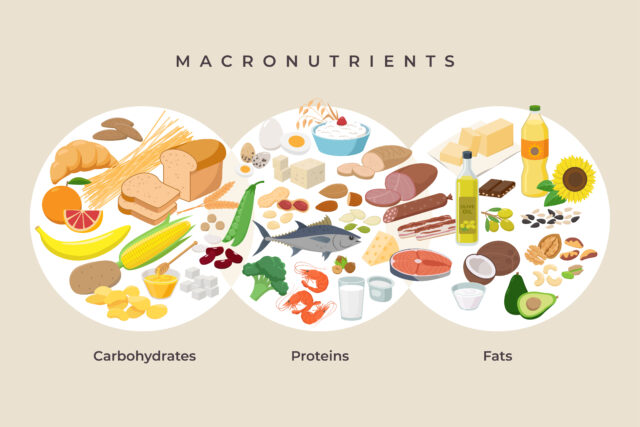
Examples of Foods High in Each Macro
Protein Sources
Protein helps repair and build muscle, support recovery, and keep you full. Common protein-rich foods include:
- Chicken, turkey, and lean beef
- Fish and seafood
- Eggs
- Lentils, beans, and chickpeas
- Greek yogurt, cottage cheese, and milk
- Tofu, tempeh, and edamame
Carbohydrate Sources
Carbs are your body’s preferred energy source, especially for workouts. Look for nutrient-rich, complex carbs like:
- Whole grains (brown rice, oats, quinoa)
- Sweet potatoes and regular potatoes
- Vegetables like broccoli, carrots, and spinach
- Fruits such as bananas, apples, and berries
- Legumes (beans, lentils, peas)
Fat Sources
Fats are crucial for hormone balance, brain health, and long-lasting energy. Healthy fat sources include:
- Avocados
- Nuts and seeds
- Olive oil and coconut oil
- Fatty fish (salmon, sardines, mackerel)
- Nut butters (almond, peanut, cashew)

Why Macros Are Important
Your body needs all three macros to function properly:
- Proteins repair tissues, build muscle, and produce enzymes and hormones.
- Carbohydrates fuel your brain and body with energy.
- Fats regulate hormones, protect organs, and support cell health.
By balancing your intake, you can improve performance, manage weight, and feel more energized throughout the day.
How to Balance Your Macros
There’s no one-size-fits-all formula, but a common guideline for healthy adults is:
- 45–65% of daily calories from carbohydrates
- 20–35% from fats
- 10–35% from protein
Your personal goals (like building muscle, losing fat, or maintaining weight) may shift these ratios slightly. For example, athletes may benefit from higher protein and carb intake, while someone focusing on fat loss may eat slightly fewer carbs and more protein.
Macros are more than just numbers on a nutrition label; they’re the building blocks of your body’s energy and performance. By learning to balance protein, carbs, and fats, you’ll fuel your workouts better, recover faster, and feel stronger every day. Start small by becoming more mindful of your food choices, and adjust your intake based on your goals.